
Our perspective

Asset class: logistics real estate

Definitions, types and characteristics

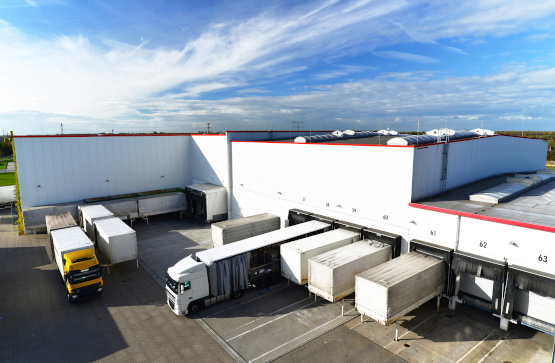
The logistics real estate market combines the logistics sector with the real estate industry. With increasing frequency, real estate surveyors and analysts have to make decisions on investment in the logistics sector. Despite the growing attention for this specific class of property, there is still no generally recognised definition of logistics real estate.

The umbrella term “logistics real estate” covers a wide variety of building types that can all be classified as belonging to the logistics sector based on their use or their particular characteristics. The fact that the various subcategories also have a major influence on the areas of application, however, and thus on the third-party utilisation of this form of real estate is generally overlooked.

In the German context, the term “Lagerhalle”, which was previously used widely, is now only used for relatively basic buildings. Nowadays, people refer instead to “logistics centre”, “central distribution centre”, “warehouse”, “distribution centre”, “goods distribution centre” or “regional distribution centre”. Here, these different terms are sometimes used synonymously and often with some overlap. To promote a common understanding of the term and also clarify what is meant by a logistics property in this study, the following definition is taken as a basis:

»A logistics property is a building constructed primarily to be used for handling and storage of goods and for associated services. It generally serves as a hub in a logistics network.«

There are many possible ways to draw distinctions between the definitions of different types of logistics property: for instance, definitions might be made with reference to the architecture or the purpose and/or position of logistics real estate in the value chain.

Alternate Text
V. 2.1